CANON DRIVE
A New Archetype for the California Estate
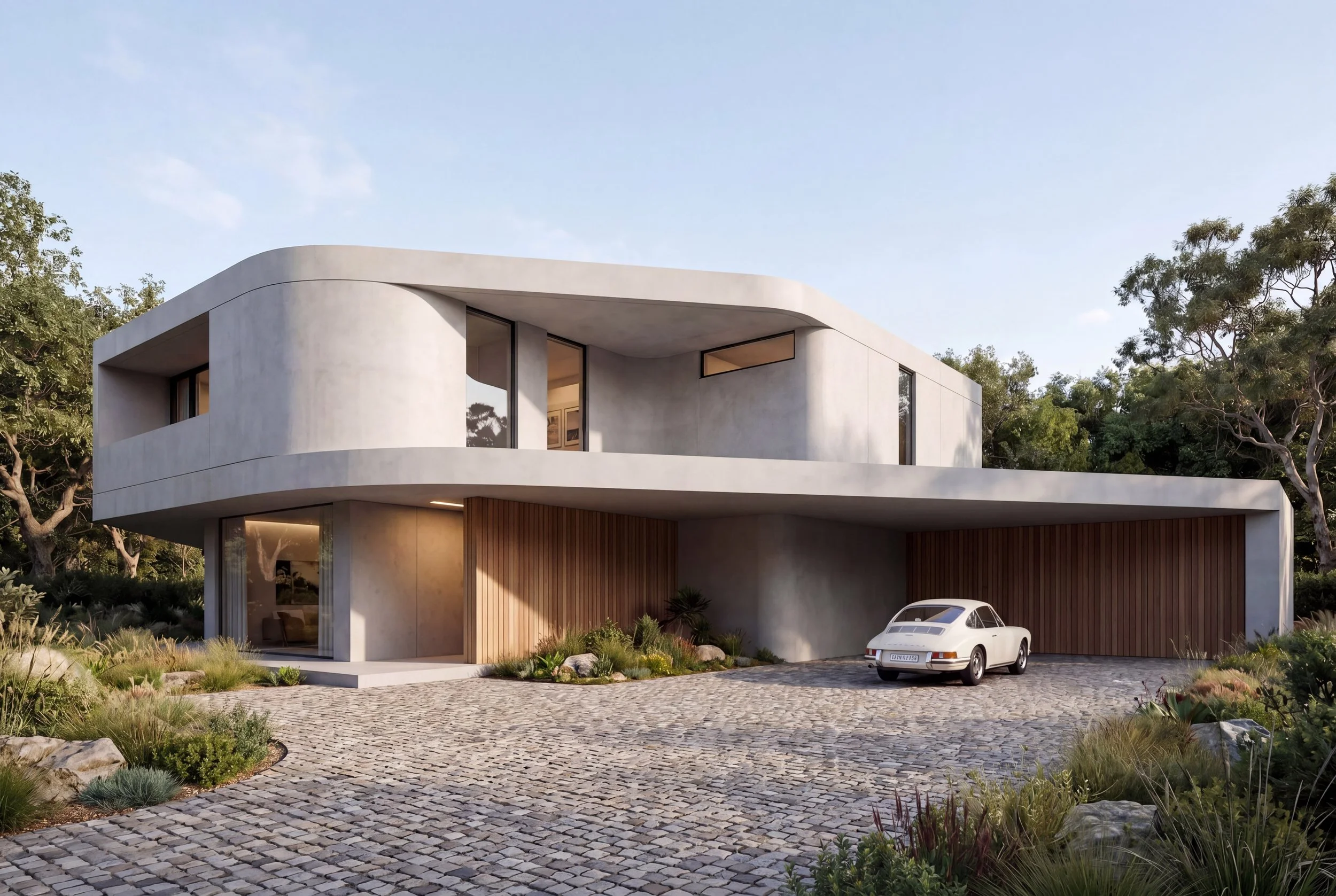
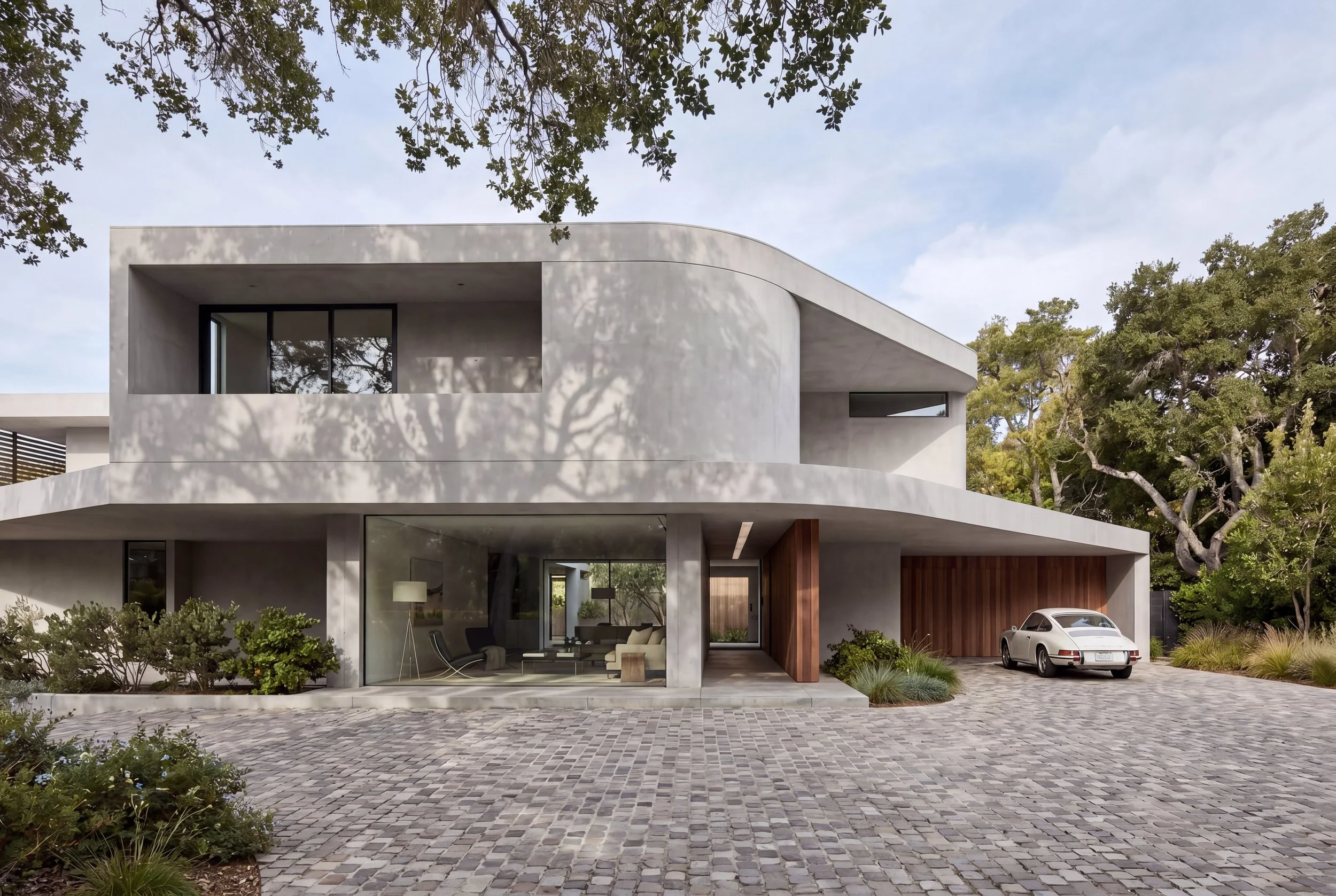
The Residence emerges from its wooded Palisades site as a study in disciplined contrasts — between weight and lightness, enclosure and openness, the raw and the refined. Conceived as two distinct worlds in vertical dialogue, the house organizes itself around a deceptively simple formal proposition: a floating concrete volume, its corners softened into sweeping curves, hovering above a transparent ground plane that dissolves the boundary between landscape and interior life.
Form as Landscape
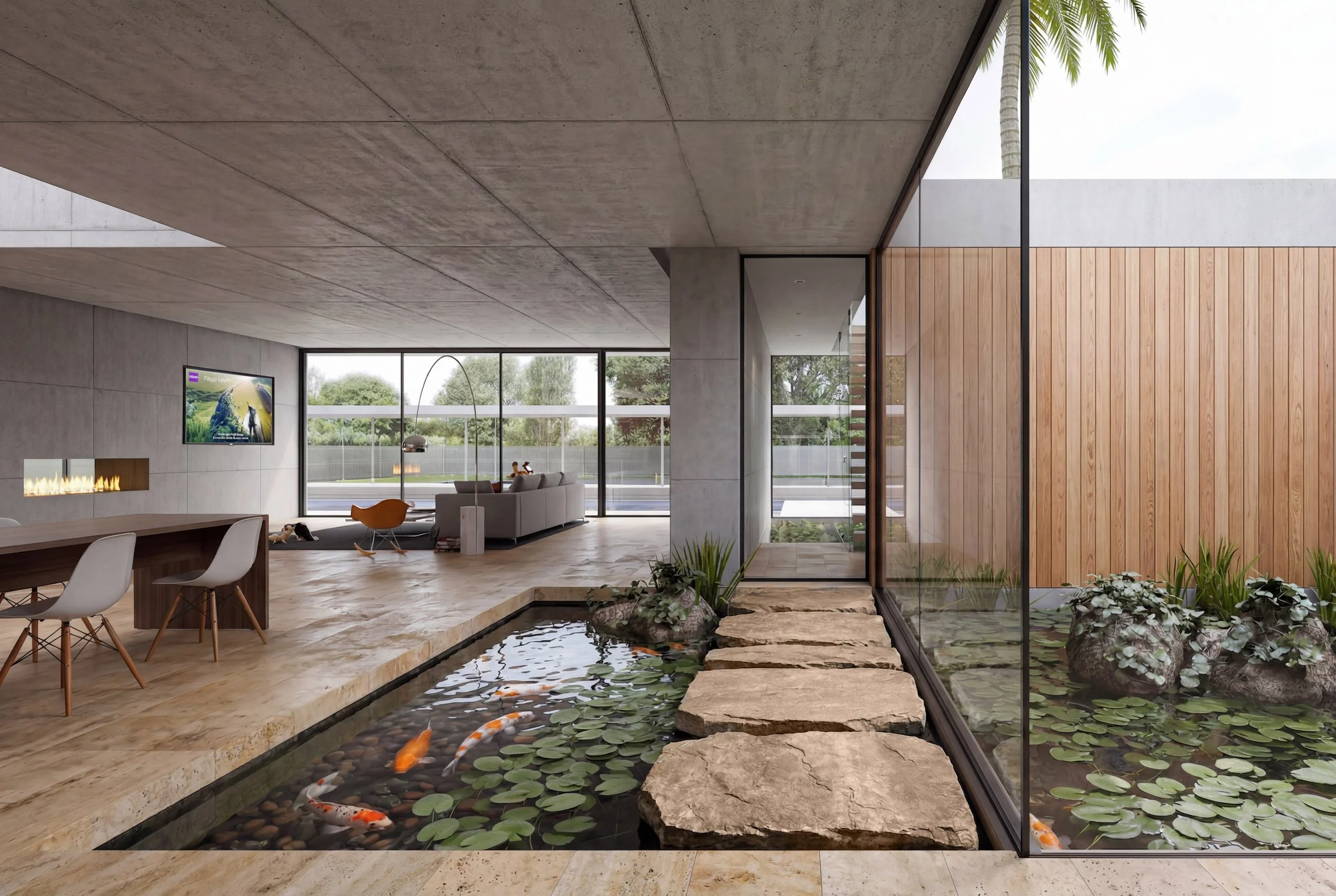
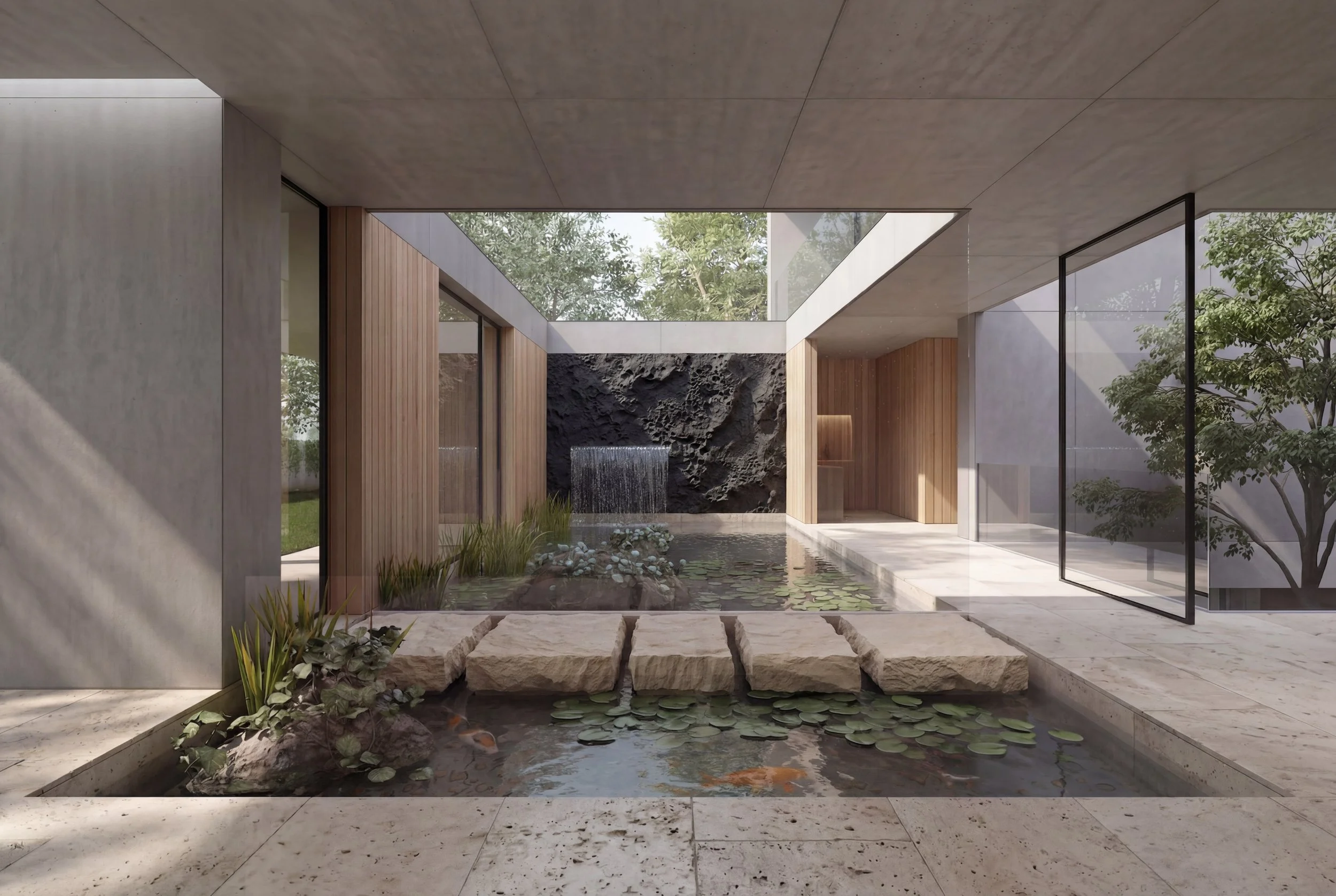
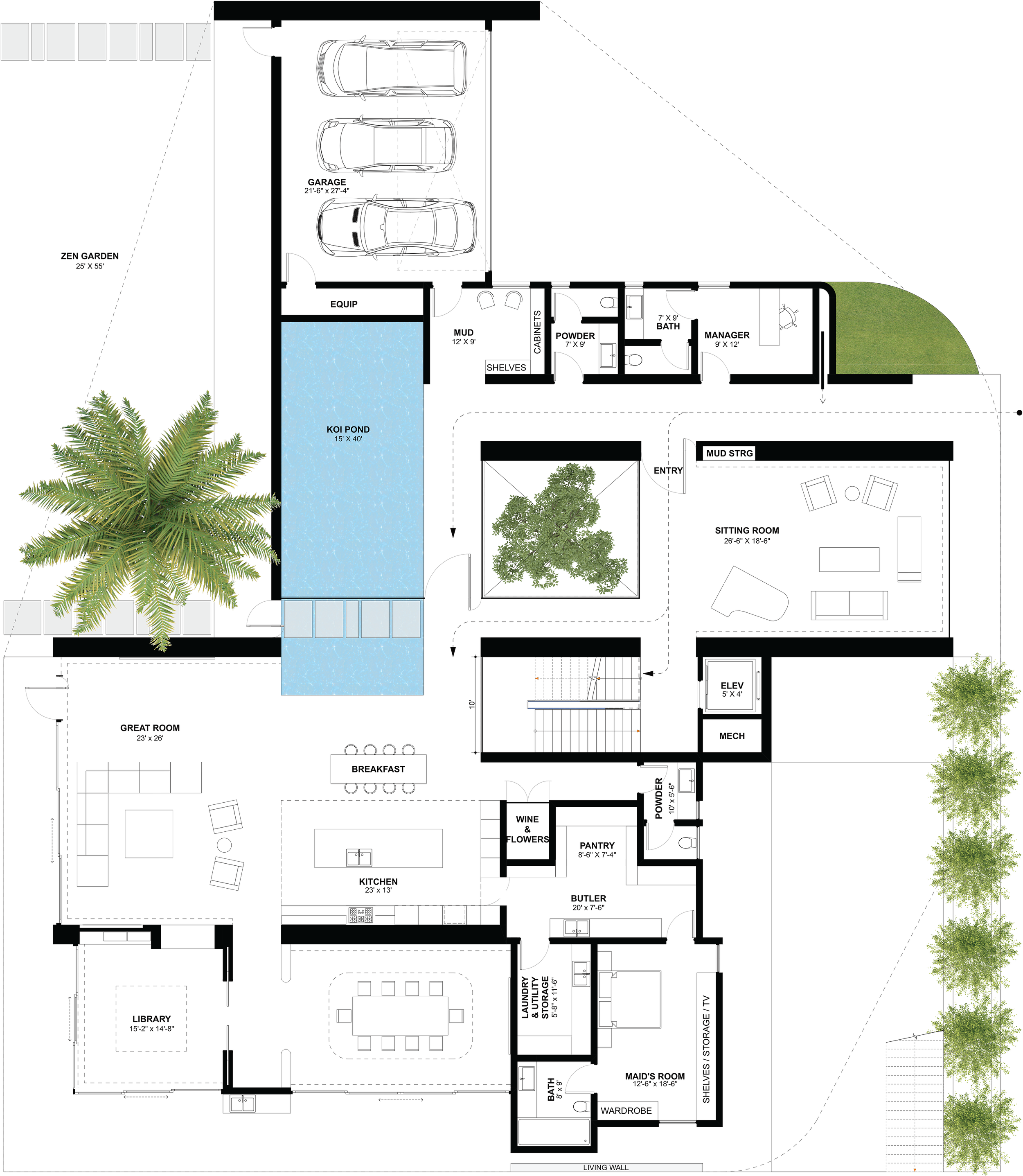
The arrival experience sets the tone. A cobblestone motor court gives way to a compressed entry sequence animated by a koi pond traversed on rough stone steppers — an unhurried transition that shifts the visitor's register from the public realm to something more contemplative. Water, landscape, and structure are not treated as separate concerns here; they are resolved into a single, continuous spatial argument.
The Section as Experience
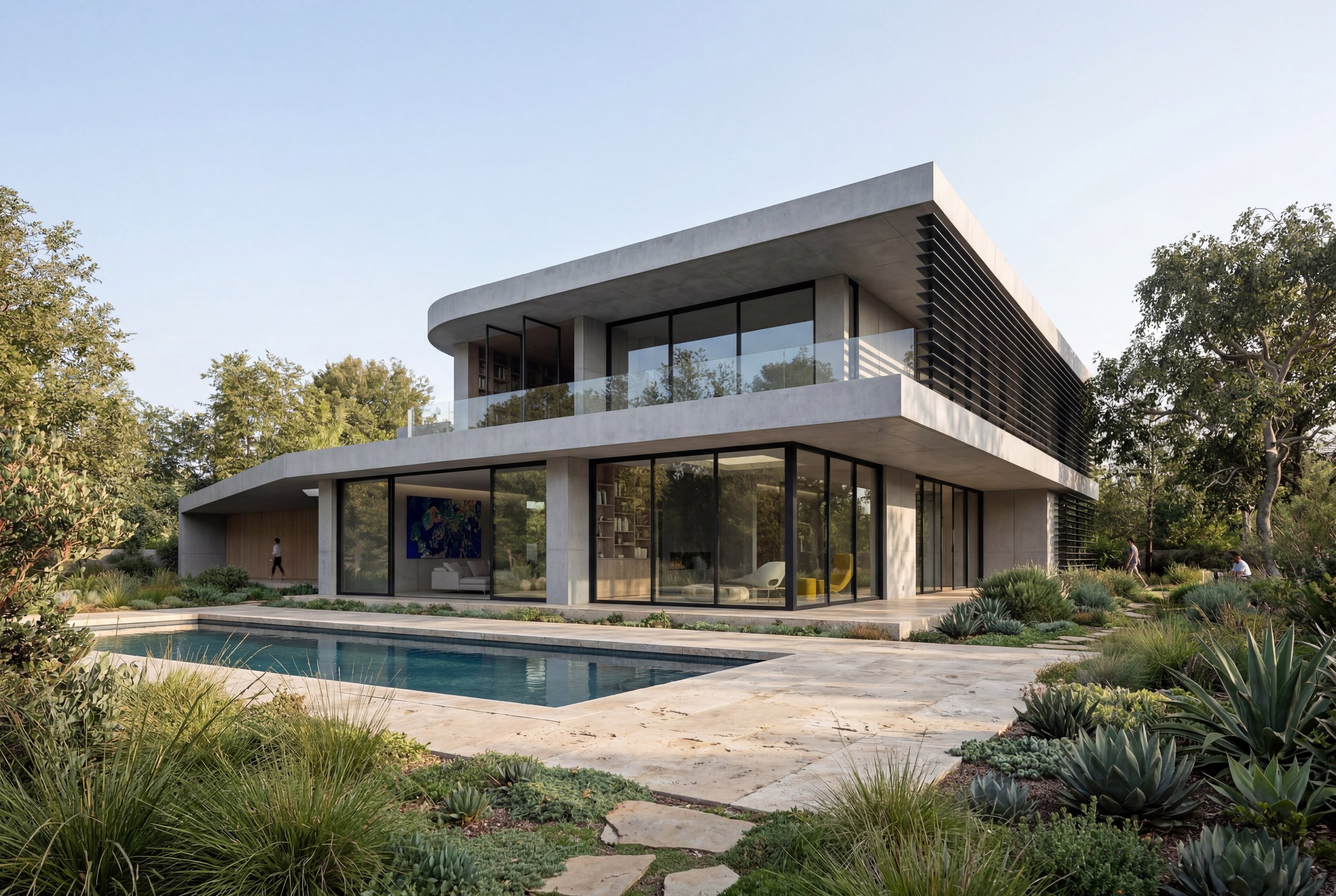
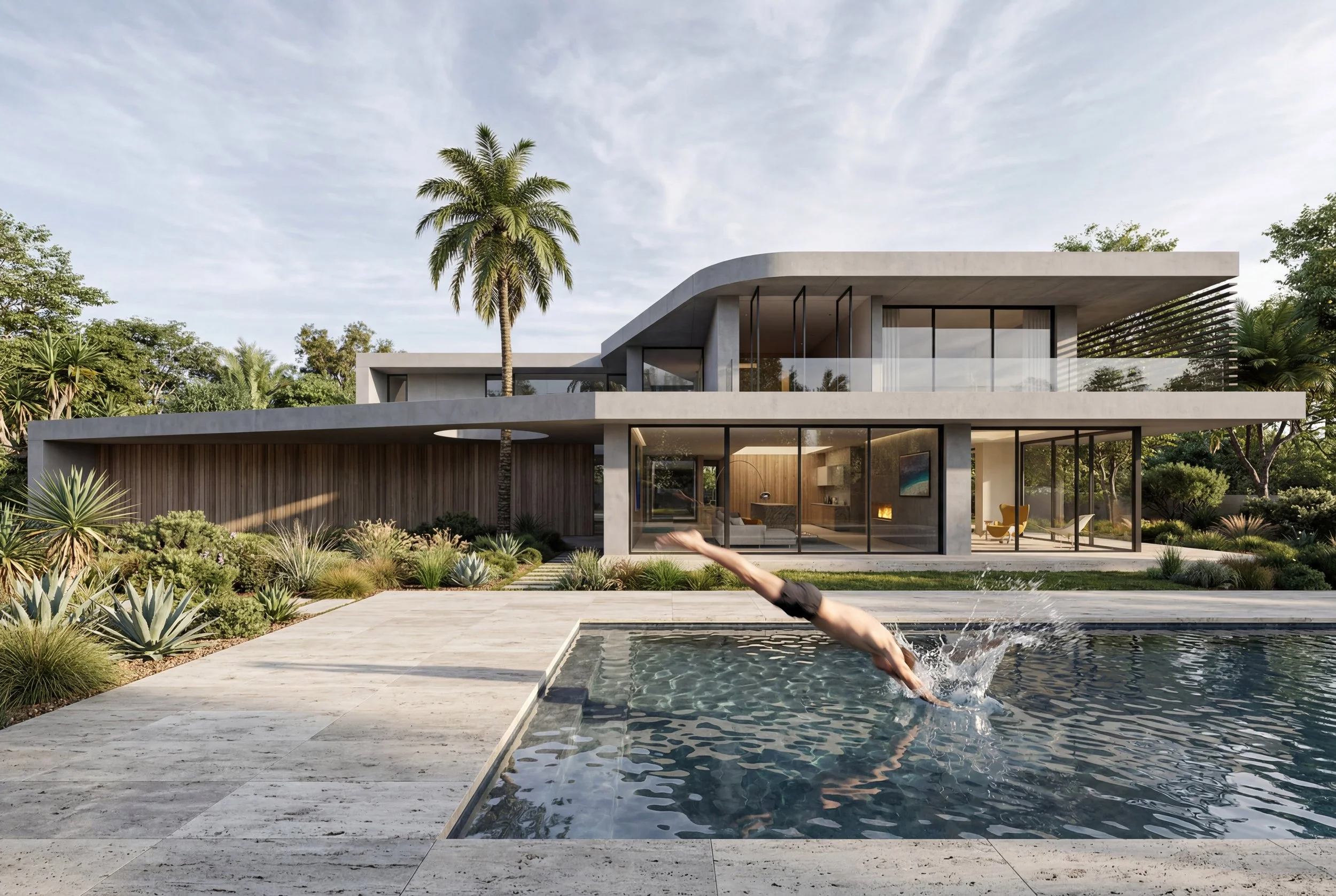
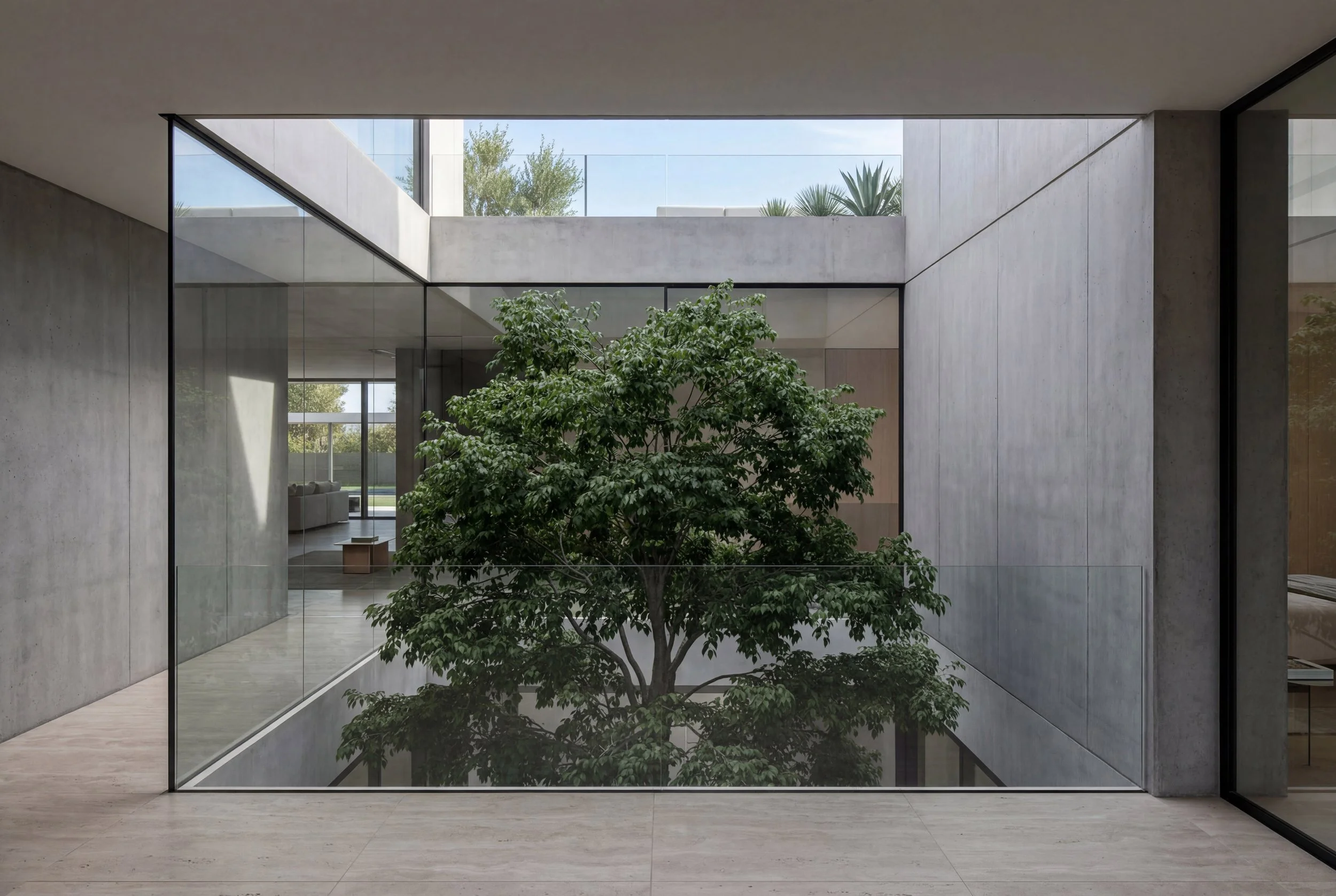
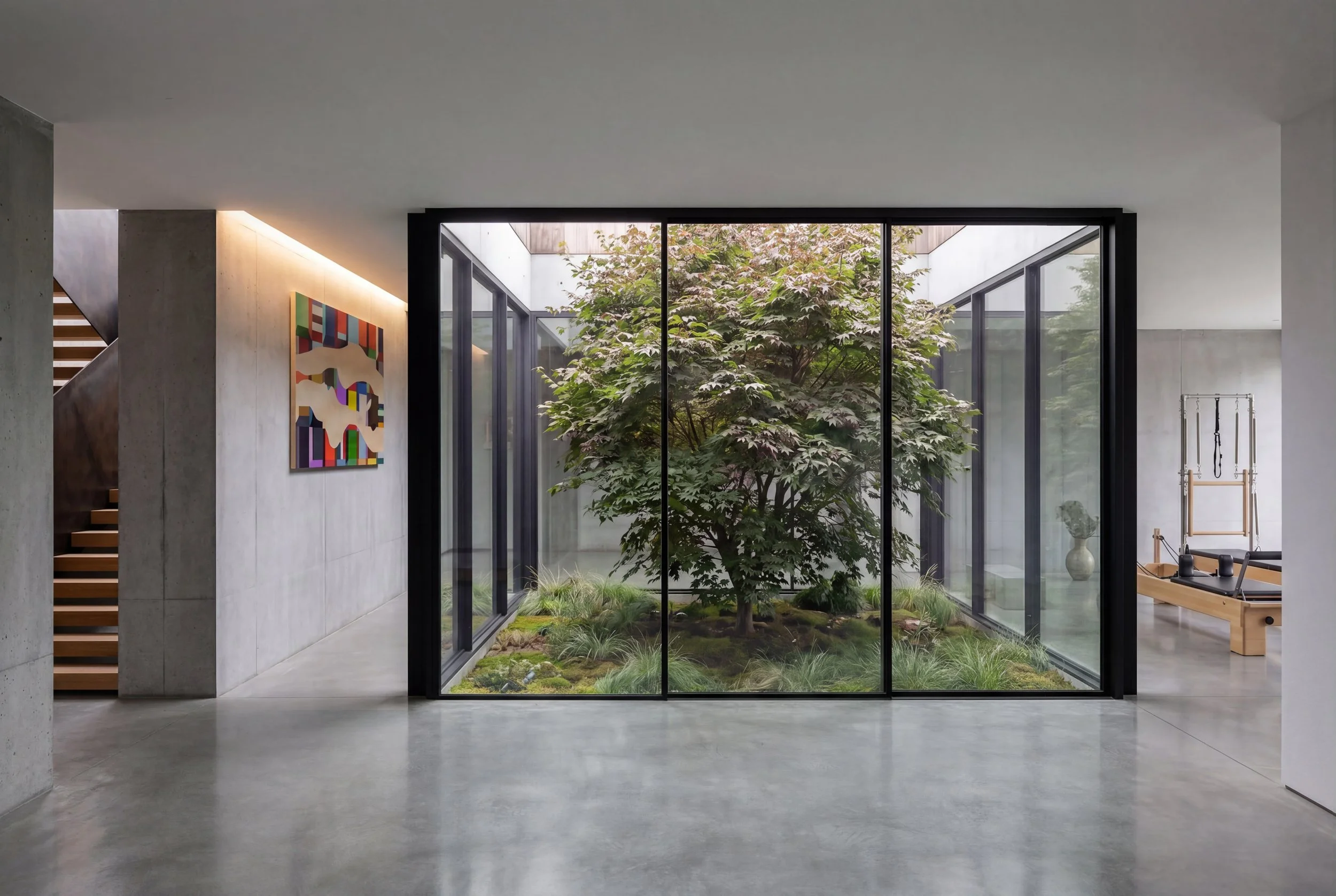
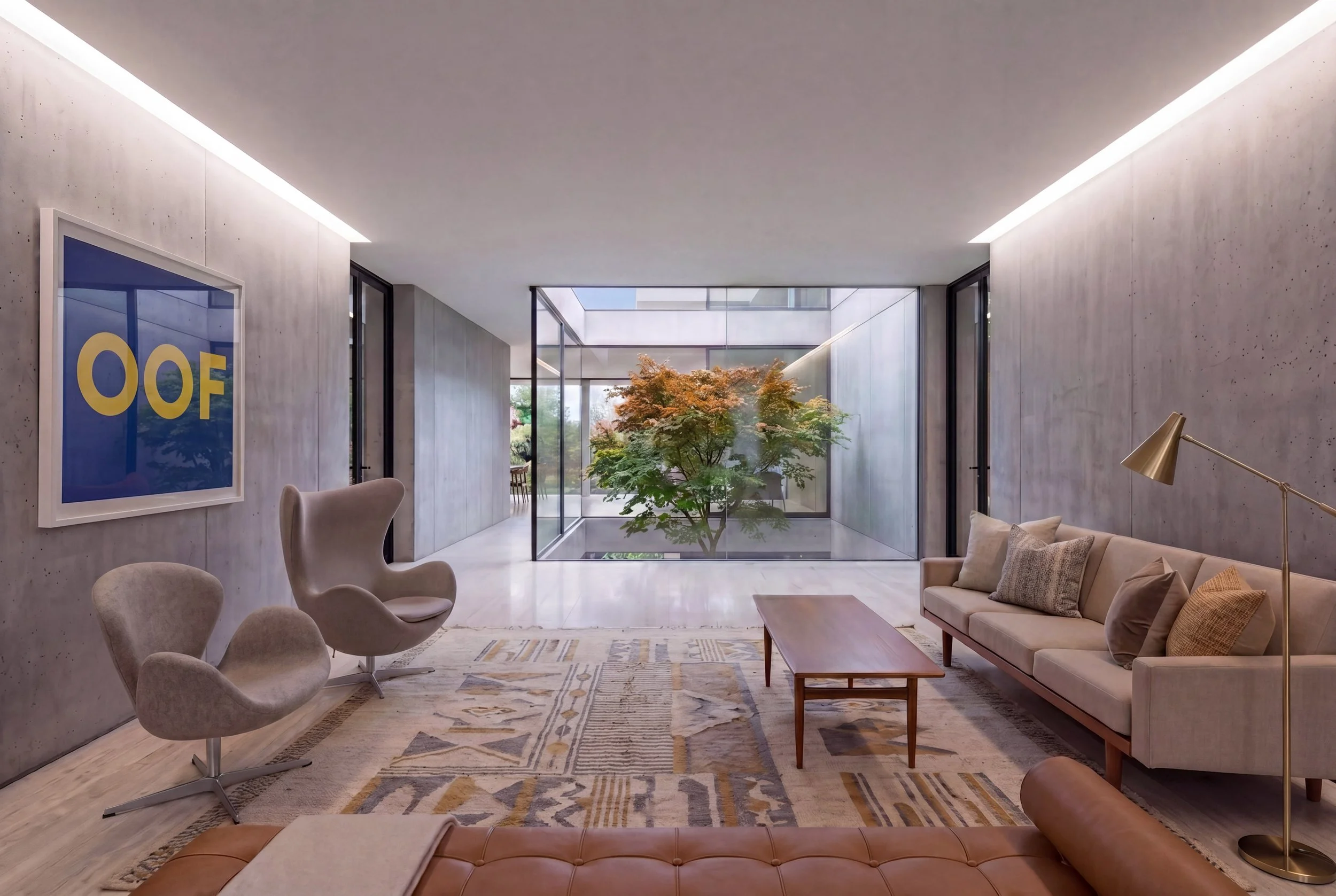
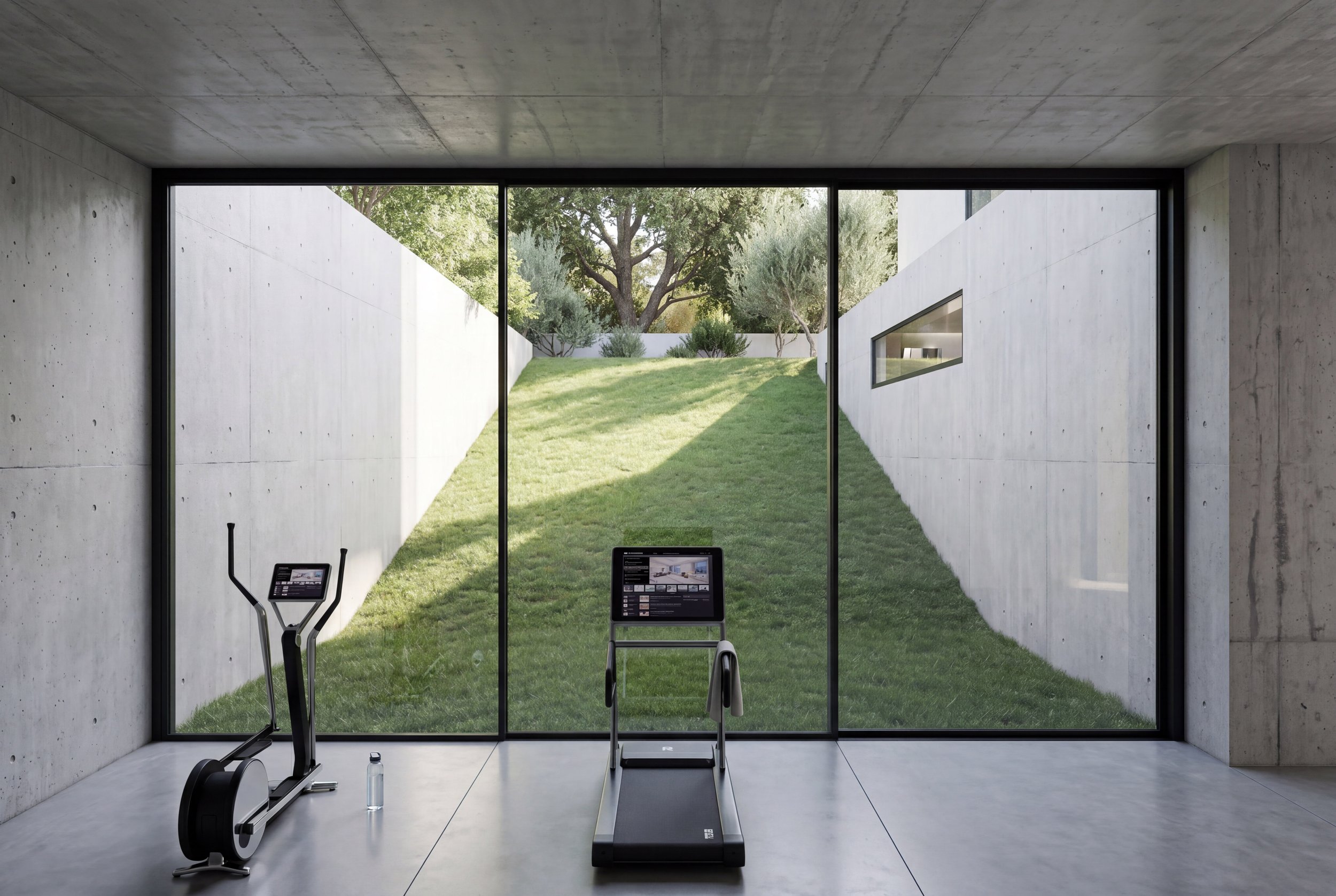
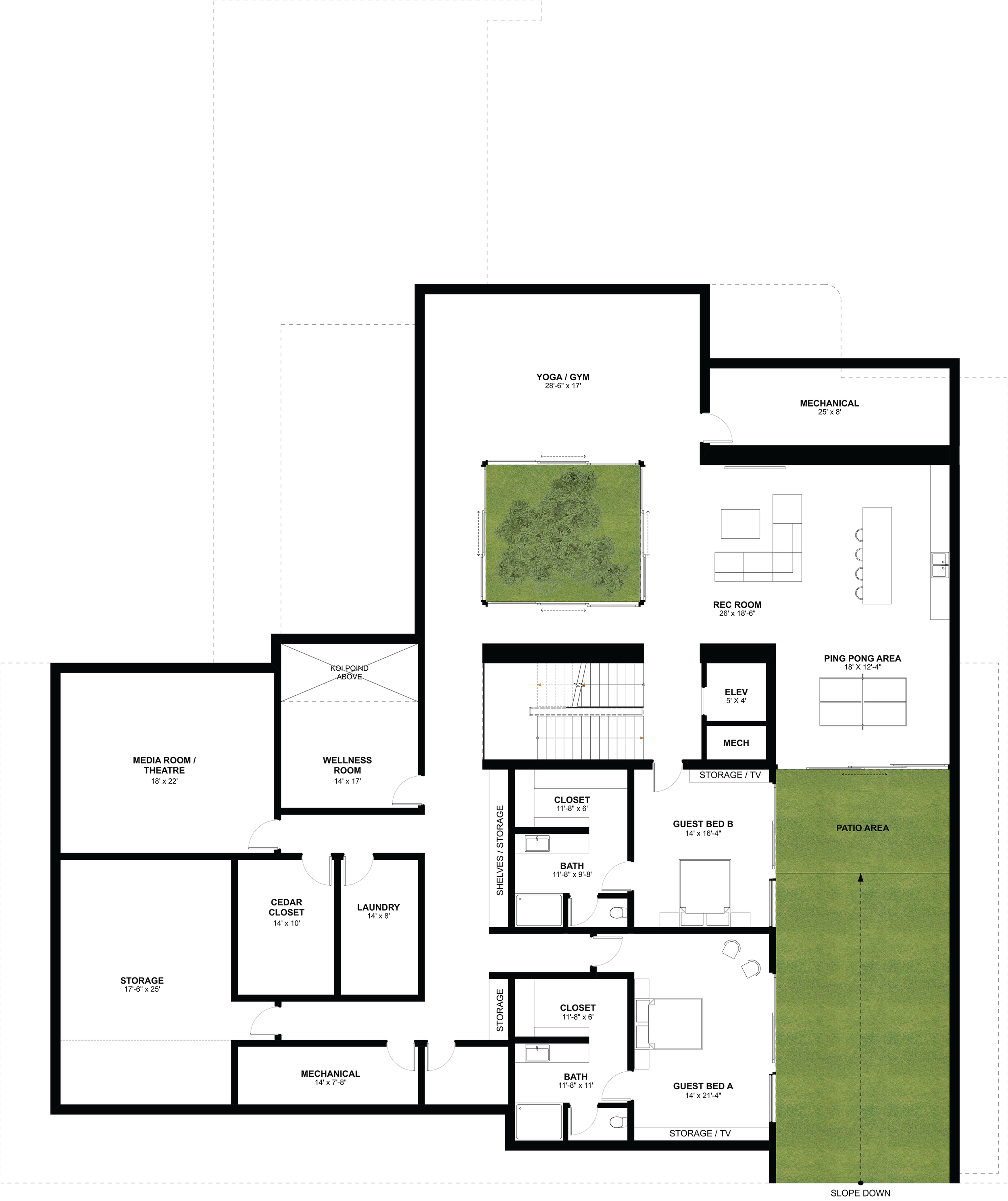
At grade, the architecture is permeable and grounded. Expansive glazing opens the primary living spaces directly to the pool terrace and drought-tolerant garden beyond, while a series of interior courtyards — each anchored by a carefully selected specimen tree — bring sky and season into the deepest reaches of the plan. These light wells are the building's quiet genius: they ensure that no room exists in isolation, and that the natural world is never more than a glance away.
Material Honesty, Material Warmth
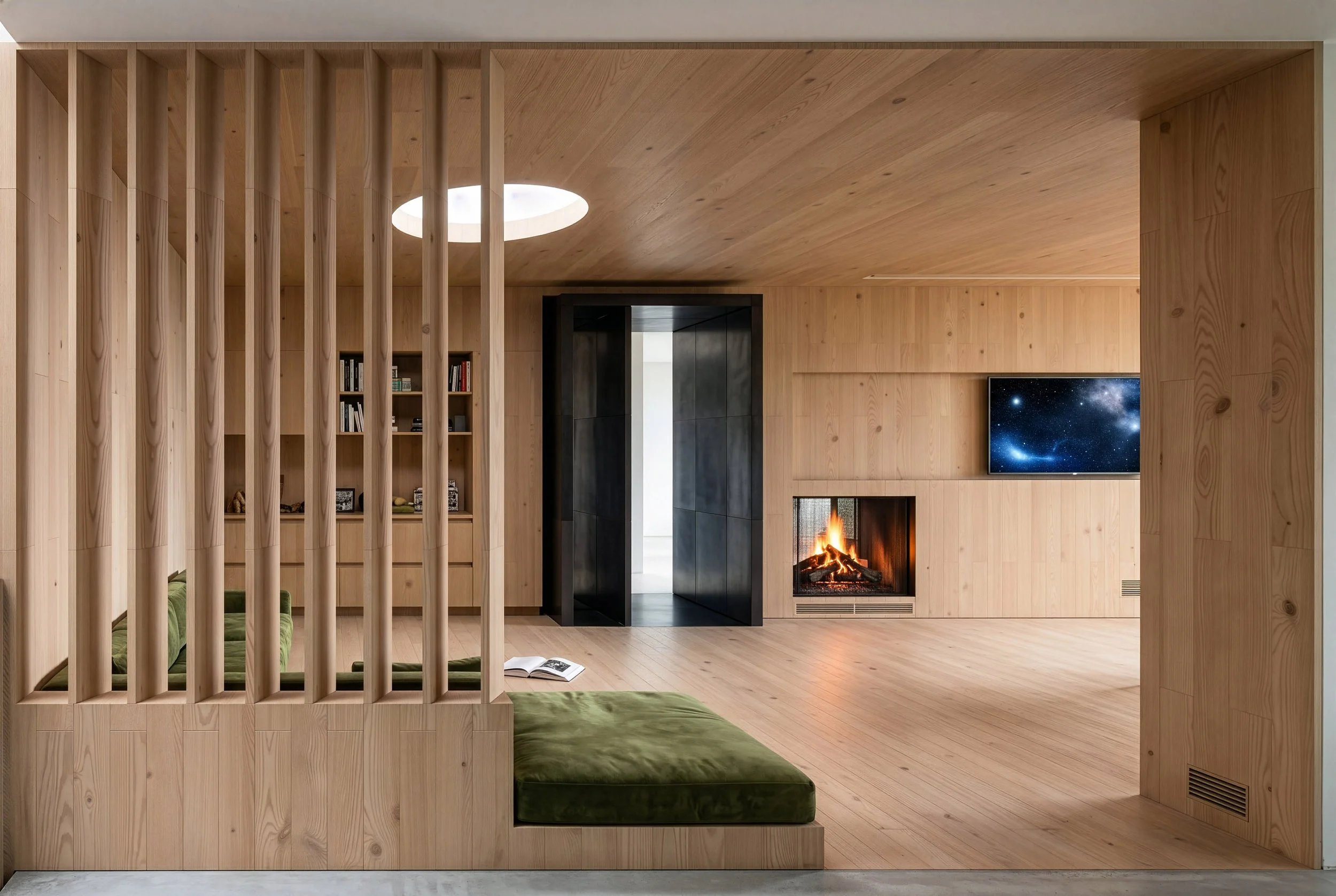
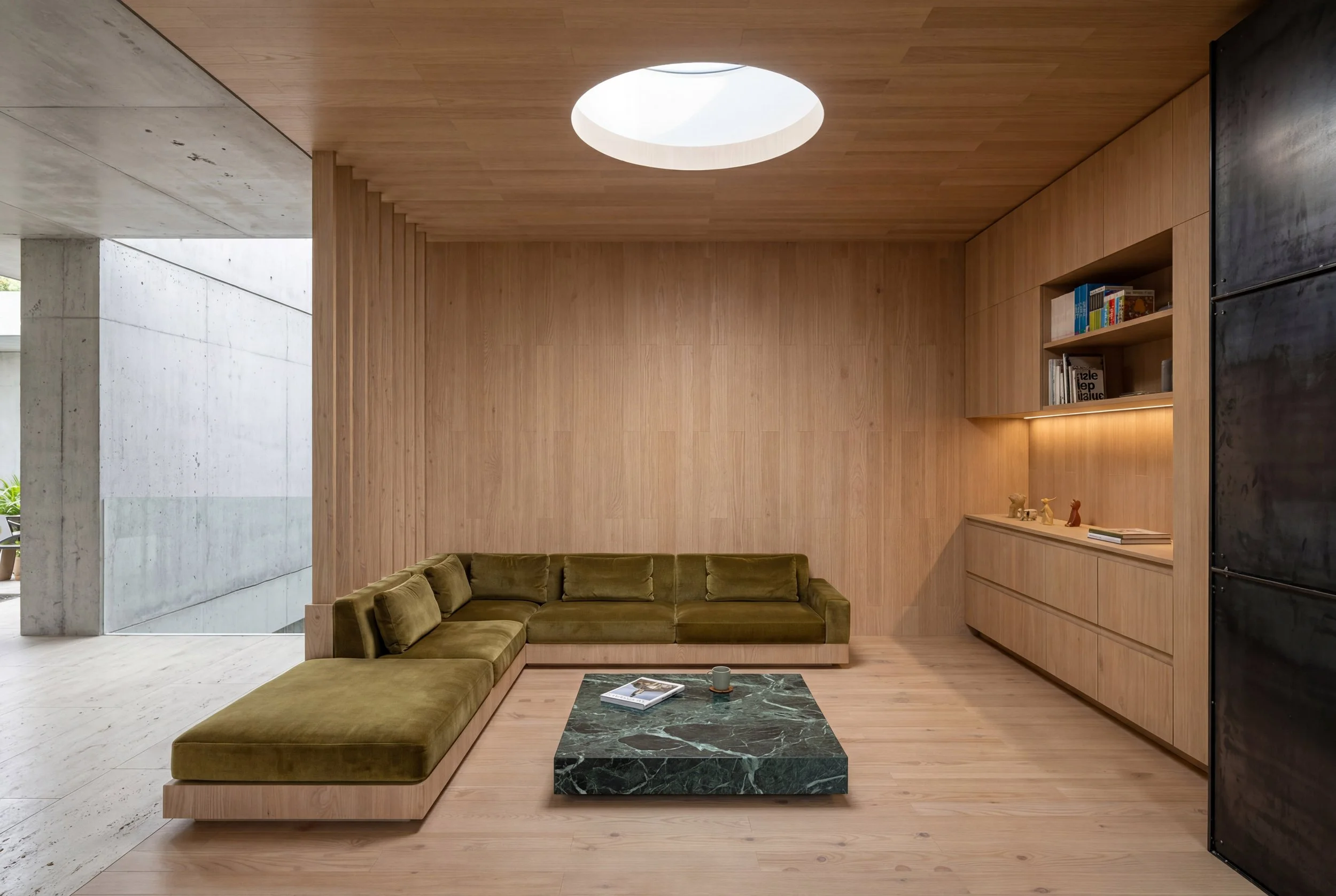
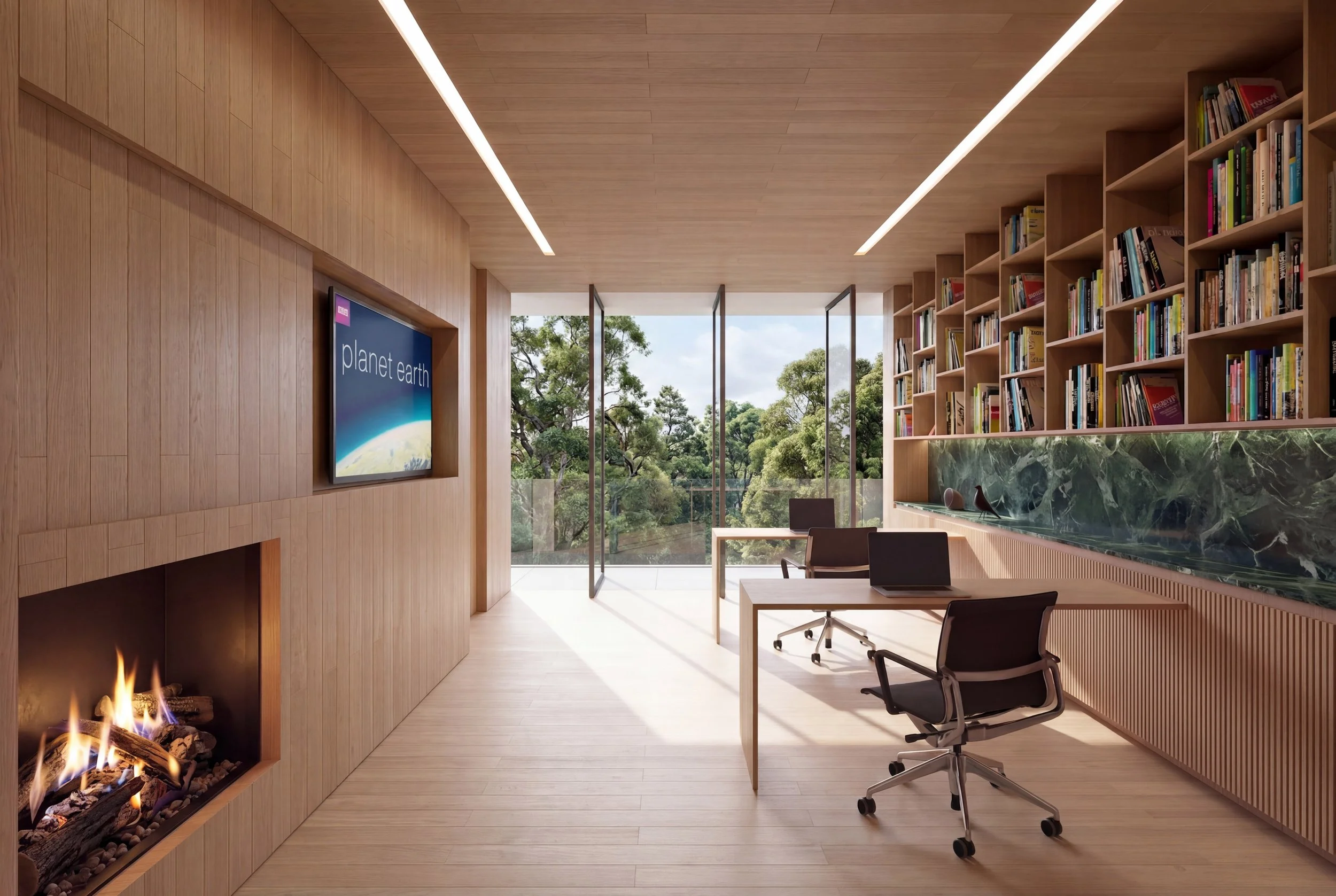
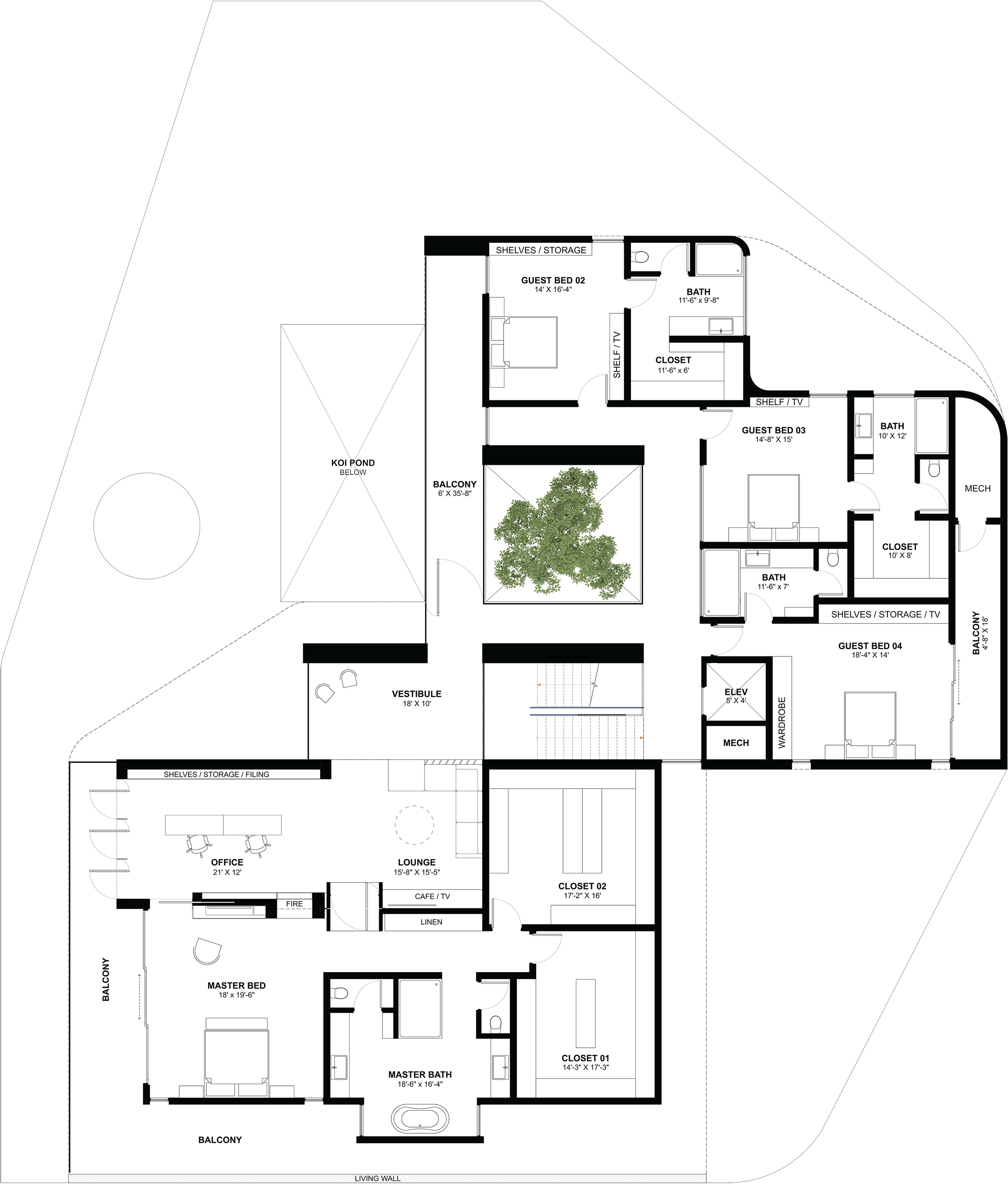
The upper level introduces an entirely different material world. White oak — applied continuously to walls, ceilings, and floors — creates an environment of enveloping warmth that stands in deliberate counterpoint to the board-formed concrete below. Circular skylights punctuate the timber ceiling planes, drawing daylight into the most intimate spaces of the home: the primary suite, the library-study with its integrated bookshelves and fireplace, the screened sleeping alcove with its slatted wood partition. The effect is both elemental and precise, a crafted interiority that rewards sustained occupation.
Toward an Architecture of Permanence
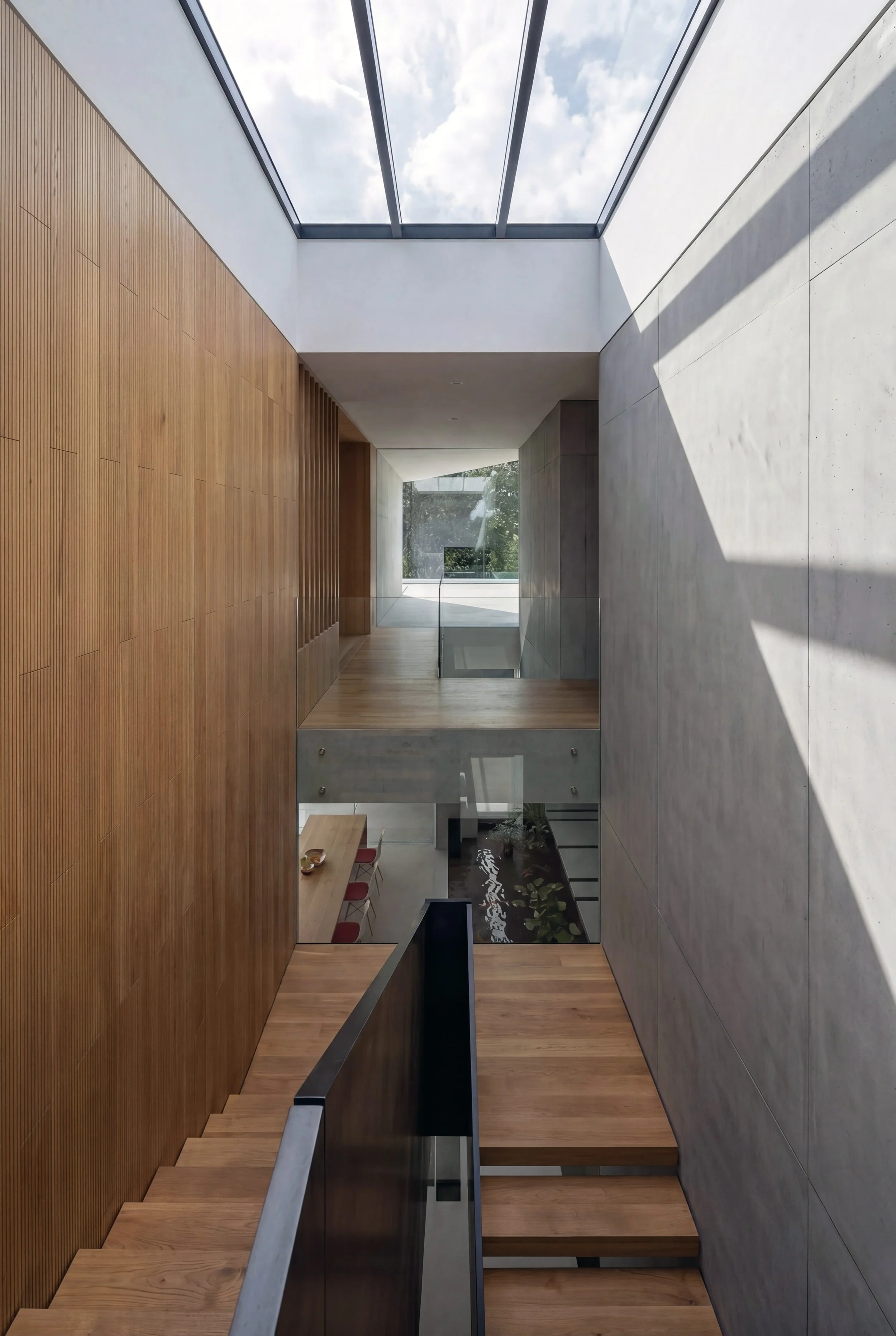
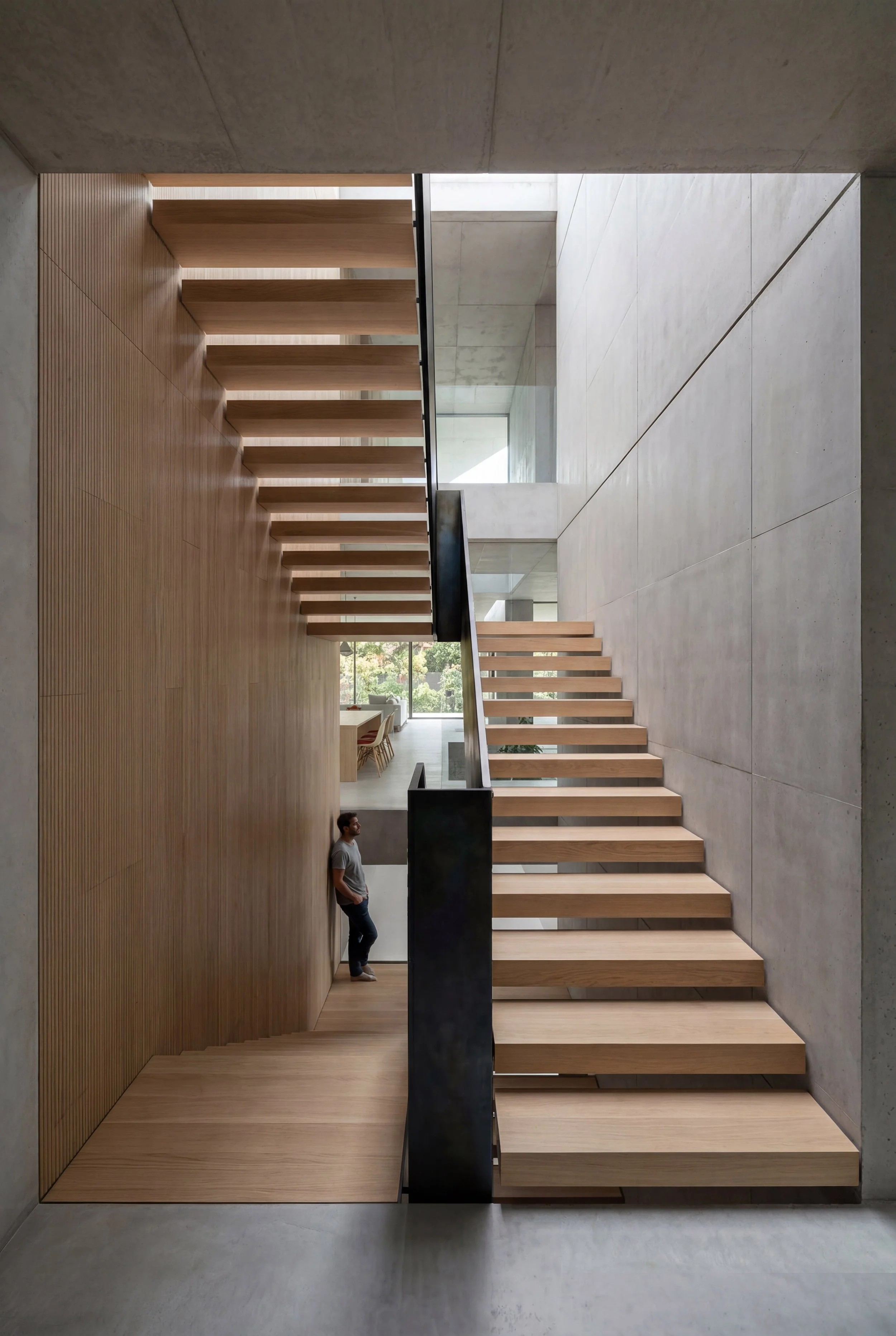
The stair, positioned at the building's organizational core, is among its most resolved moments. White oak treads cantilever from a blackened steel spine beneath a full-height skylight, transforming vertical movement into a genuinely experiential passage. From above, the view down to the entry pond — glimpsed through a glass guardrail — connects the building's two registers in a single architectural gesture.
Throughout, the material palette maintains its discipline: board-formed concrete, white oak, Verde Guatemala marble, blackened steel, and honed limestone surfaces in consistent, considered combination. Nothing is decorative in the conventional sense. Every finish decision carries structural or spatial weight.
SIZE
16,000 sf
COMPLETION
Design Development
ROLE
Principal Architect / Interior Design